


Top 10 Foods to Increase Sperm Count
Sperm counts have been declining for decades.
At the same time, conversations around fertility still tend to focus on the woman’s cycle and hormones, even though male factors contribute to about half of infertility cases.
The good news?
Sperm production is highly responsive to nutrition and lifestyle.
Unlike egg quality, sperm are constantly being replaced. It takes about 70 to 90 days to produce a new batch, which means the choices you make today can influence sperm quality a few months from now.
The food you eat provides many of the nutrients your body needs to produce healthy sperm, support testosterone, reduce inflammation, and protect sperm from oxidative damage.
In this article, we'll cover:
- Why nutrition matters for sperm count
- The top 10 foods to increase sperm count naturally
- Other lifestyle habits that can make a big difference
- Frequently asked questions about male fertility
Why Food Matters for Sperm Count
Unlike eggs, man’s sperm is not a fixed supply.
The body makes a new batch roughly every three months, which means the “pot” is constantly being replaced. That’s why we recommend giving nutrition and lifestyle changes at least one full sperm-production cycle before expecting to see measurable improvements.
Because the body is constantly producing new sperm, the entire process is sensitive to a man’s overall health.
Because sperm are constantly developing, their health is influenced by a man’s overall metabolic and nutritional health throughout that process.
Blood sugar regulation, inflammation, nutrient status, body composition, and lifestyle exposures can all affect sperm count, motility (how well they move), morphology (their shape), and DNA quality.
Sperm are also particularly vulnerable to oxidative stress.
Their outer membranes are rich in delicate polyunsaturated fatty acids, which are essential for healthy movement and function but are easily damaged by free radicals. Excess oxidative stress can damage both the sperm membrane and its DNA, reducing its ability to move normally and fertilize an egg.
This is exactly why antioxidant-rich foods dominate this list. Antioxidants help protect sperm as they develop, while other key nutrients support hormone production, blood sugar balance, and the formation of healthy sperm cells.
Many of the foods below support several of these systems at the same time.
That's one reason we focus on overall dietary patterns rather than searching for one magical "fertility food."

Top 10 Foods to Increase Sperm Count
1) Oysters
Oysters are one of the best food sources of zinc, a mineral that plays an important role in testosterone production, sperm development, and healthy sperm motility.
Low zinc levels are linked to lower sperm counts, lower testosterone levels, and poorer overall sperm quality. Oysters also provide iron, omega-3 fats, and other trace minerals that support reproductive health.
Not an oyster fan? Beef, crab, pumpkin seeds, chickpeas, cashews, and quinoa can also help increase your zinc intake.
2) Omega-3 Rich Fish
Salmon, sardines, mackerel, and barramundi are excellent sources of omega-3 fats.
Omega-3s help maintain healthy sperm cell membranes, reduce inflammation, and support normal sperm movement.
Research has also linked higher omega-3 intake with improved sperm count, healthier sperm shape, larger semen volume, and healthier reproductive hormone patterns.
6 ounces of salmon provides about 1,800 mg of omega-3s, and 6 ounces of barramundi provides around 1,000 mg. Sardines offer a similar omega-3 load to salmon, but they're higher in arsenic, so we recommend capping them at 2 to 3 servings per week.
Try to incorporate omega-3 rich fish about twice per week.
3) Eggs
Eggs are one of our favorite fertility foods because they provide several important nutrients in one convenient package.
They're rich in vitamin B12, healthy fats, selenium, choline, and leucine, an amino acid that supports lean muscle and metabolic health.
They’re also an easily digested source of high-quality protein which provides the building blocks needed for hormone production and tissue repair.
Because the yolk contains many of the nutrients and fats involved in reproductive health, we recommend choosing whole eggs rather than egg whites alone.
4) Brazil Nuts
Brazil nuts are one of the best food sources of selenium, a mineral that functions as an antioxidant and helps protect developing sperm from oxidative stress. Selenium also supports healthy sperm movement and structure.
One or two nuts is typically plenty. Their selenium content can vary significantly, so more is not necessarily better—especially if you also take a supplement containing selenium.
Other selenium-rich foods include tuna, halibut, sardines, eggs, chicken, and sunflower seeds.
5) Tomatoes
Tomatoes are rich in lycopene, a powerful antioxidant associated with healthier sperm size and shape.
Sperm cells are particularly vulnerable to oxidative damage because their outer membrane contains large amounts of polyunsaturated fats . Antioxidants like lycopene help protect those cells from damage during development.
Other sources of lycopene include watermelon, pink grapefruit, papaya, and guava.
6) Dark Leafy Greens
Spinach, kale, romaine, and other leafy greens provide folate, lutein, magnesium, and a variety of antioxidants.
Lutein has been linked to better sperm motility, while folate supports healthy DNA production during sperm development.
Adding a serving or two of leafy greens each day is a simple way to increase your intake of fertility-supportive nutrients.
7) Sweet Potatoes and Carrots
Orange vegetables like sweet potatoes, carrots, pumpkin, and butternut squash are rich in beta-carotene, a plant compound in the carotenoid family.
Higher carotenoid intake has been associated with healthier sperm motility, likely because these compounds help protect developing sperm from oxidative stress.
These vegetables also provide slow-digesting carbohydrates that can support steadier blood sugar levels when paired with protein and healthy fat. Because insulin resistance can interfere with testosterone production and sperm health, supporting healthy blood sugar regulation is an important part of male fertility.
8) Berries and Colorful Fruit
Berries are rich in vitamin C and a variety of antioxidants that help protect developing sperm from oxidative stress.
Oxidative damage doesn't just affect sperm count. It can also contribute to DNA fragmentation, which may negatively affect fertility even when a semen analysis appears relatively normal.
Building meals around colorful fruits and vegetables helps increase overall antioxidant intake naturally.
9) Beans and Lentils
Beans and lentils are packed with fiber, plant protein, folate, iron, and antioxidants.
They're also one of our favorite foods for supporting healthy blood sugar. Stable blood sugar helps create an environment that's more supportive of healthy hormone production.
Fiber also supports a healthy gut microbiome and regular digestion, which plays an important role in inflammation, nutrient absorption, and overall metabolic health.
10) Pumpkin Seeds
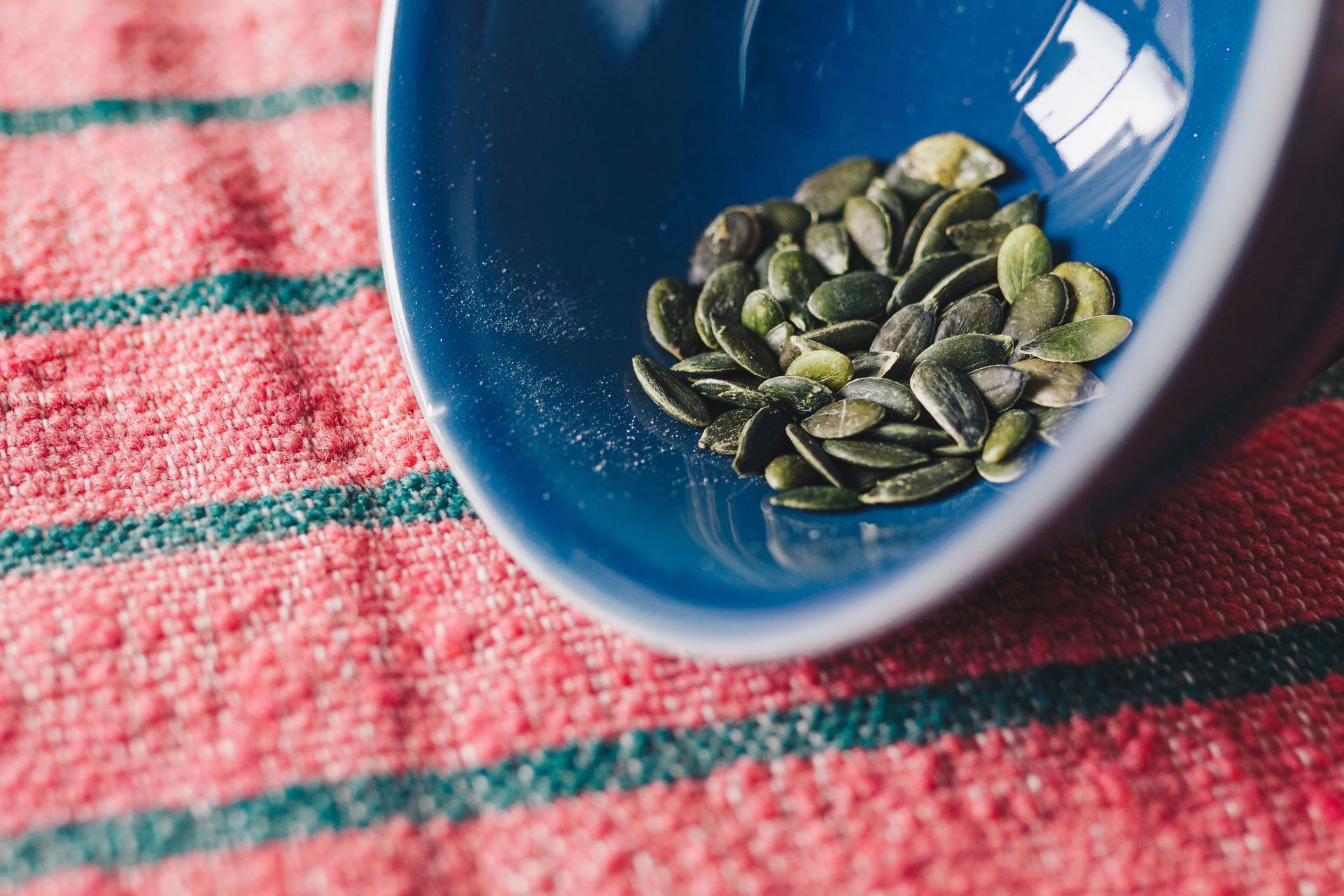
Pumpkin seeds combine two nutrients that support male fertility: zinc and healthy fats.
They're an easy addition to yogurt, oatmeal, salads, or homemade trail mix and can help boost overall mineral intake throughout the week.
Like most fertility-supportive foods, pumpkin seeds work best as part of an overall nutrient-dense eating pattern rather than as a standalone solution.
Don't Forget the Foundations (Other Diet Habits Worth Building)
Adding a few fertility foods while ignoring everything else won’t lead to meaningful change.
The overall pattern of how you eat matters more than any one food, so we also encourage clients to focus on these foundations.
Eat Enough Healthy Fats
Healthy fats provide the building blocks for steroid hormones like testosterone.
Good choices include olive oil, nuts, seeds, avocados, fatty fish, and whole eggs.
But more fats isn’t automatically better - overdoing it can lead to weight gain and crowd out carbohydrates and protein. Balancing fats with carbs and protein matters!
Prioritize Protein
Adequate protein supports hormone production, muscle mass, metabolism, and the production of hormones and enzymes involved in reproductive health - yet many men accidentally don’t get enough.
Include a quality protein source at each meal like eggs, fish, dairy, poultry, or lean meat.
If you can, work with an experienced men’s health dietitian that can calculate the amount of protein your body needs based on your body size, activity level, medical history, and test results.
Stay Hydrated
Hydration is an often overlooked aspect of sperm health and overall fertility.
Even mild dehydration can reduce semen volume, increase semen thickness, and make it more difficult for sperm to move efficiently.
Don’t fall for the “8 cups a day” rule. Start with at least 60% of your body weight in ounces, and adjust for factors like warmer weather, sweaty workouts, and outdoor jobs.
Build an Antioxidant-Rich Plate
Instead of chasing one fertility "superfood," focus on variety.
Colorful vegetables and fruits, beans, nuts, seeds, fish, herbs, spices, and other minimally processed foods provide a wide range of antioxidants and nutrients involved in sperm development.

Food Isn't the Whole Solution
If sperm count is low, food is only one piece of the puzzle.
Other factors that commonly influence fertility include:
- Poor sleep
- Chronic stress
- Excess body fat
- Insulin resistance
- Smoking, vaping, or other nicotine use
- Frequent or heavy alcohol intake
- Marijuana use
- Heat exposure from hot tubs or saunas
- Environmental chemical exposure
- Certain medications
- Testosterone replacement therapy (TRT)
Because sperm takes about three months to develop, meaningful improvements require consistency.
Don’t expect to see changes in a matter of days or weeks after improving these habits.
Give nutrition and lifestyle changes at least one full sperm-production cycle before reassessing your progress.
Frequently Asked Questions
How long until you see a difference?
Sperm take about three months to fully develop, so dietary changes will take time to show up in a semen analysis. We generally tell clients to give any new approach at least three months before reassessing, which lines up with one full production cycle.
Which foods increase sperm count the fastest?
There isn't one food that works quickly. Sperm production takes about three months, so meaningful improvements generally require several months of consistent nutrition and lifestyle changes.
Are there specific nutrients I should focus on?
Research consistently supports the importance of zinc, selenium, vitamin D, vitamin B12, folate, and omega-3 fats for healthy sperm production and quality. The best place to start is with a nutrient-dense diet. If deficiencies are suspected, testing can help determine whether targeted supplementation is appropriate.
Should I buy organic?
Choosing organic produce when possible can help reduce exposure to pesticide residues, which can be especially relevant for male fertility. Some research has found that men who ate more fruits and vegetables with lower pesticide residues had higher sperm counts compared to men who ate more high-residue produce.
That said, organic isn’t all-or-nothing. Eating plenty of fruits and vegetables is still more important than avoiding produce altogether because it isn’t organic.
If your budget is tight, consider prioritizing organic for higher-residue produce (check out the Dirty Dozen for guidance) and choose conventional produce for items with a peel like bananas, avocados, etc.
Should I take supplements instead?
Supplements can be helpful when deficiencies are present or when additional support is needed, but they can’t replace a healthy diet.
We identify nutrient deficiencies and underlying drivers with testing rather than guessing.
Testing allows us to build a plan that's personalized instead of relying on trial and error.
Test Before You Guess
If you're making dietary changes to support fertility, it helps to know your starting point.
A semen analysis gives a clear picture of count, motility, and morphology, and it can be done at a fertility clinic or at home.
We often recommend Proov's at-home test (use code PLATEANDCANVAS for 15% off at proovtest.com or use this link: https://proovtest.com/PLATEANDCANVAS).
It's HSA/FSA eligible and considerably cheaper than testing through a fertility clinic.
If your results come back outside the reference range, don’t panic. A semen analysis is helpful information, not a final verdict.
We’ve helped men improve their sperm health naturally by addressing hormone balance, blood sugar regulation, inflammation, nutrient status, and key lifestyle factors that influence fertility.
Bringing It All Together
There isn’t one magic food that can increase sperm count naturally on its own.
Healthy sperm production is influenced by the bigger picture: a nutrient-dense diet, healthy blood sugar regulation, adequate sleep, regular movement, hormone balance, body composition, and overall levels of inflammation and oxidative stress.
Food provides an important foundation, but fertility is rarely about one nutrient or one habit.
If you've been trying to conceive without success or your semen analysis shows results outside of optimal ranges, a more comprehensive evaluation can help you understand which factors need attention.
At Plate and Canvas, we use a functional medicine approach along with advanced lab testing to identify what is contributing to your fertility challenges and build a personalized plan based on your health history, symptoms, lifestyle, and test results.
If you’re ready to stop guessing and take a more personalized approach to improving sperm health, book a discovery call
here to see if our approach is a good fit.
Continue Reading